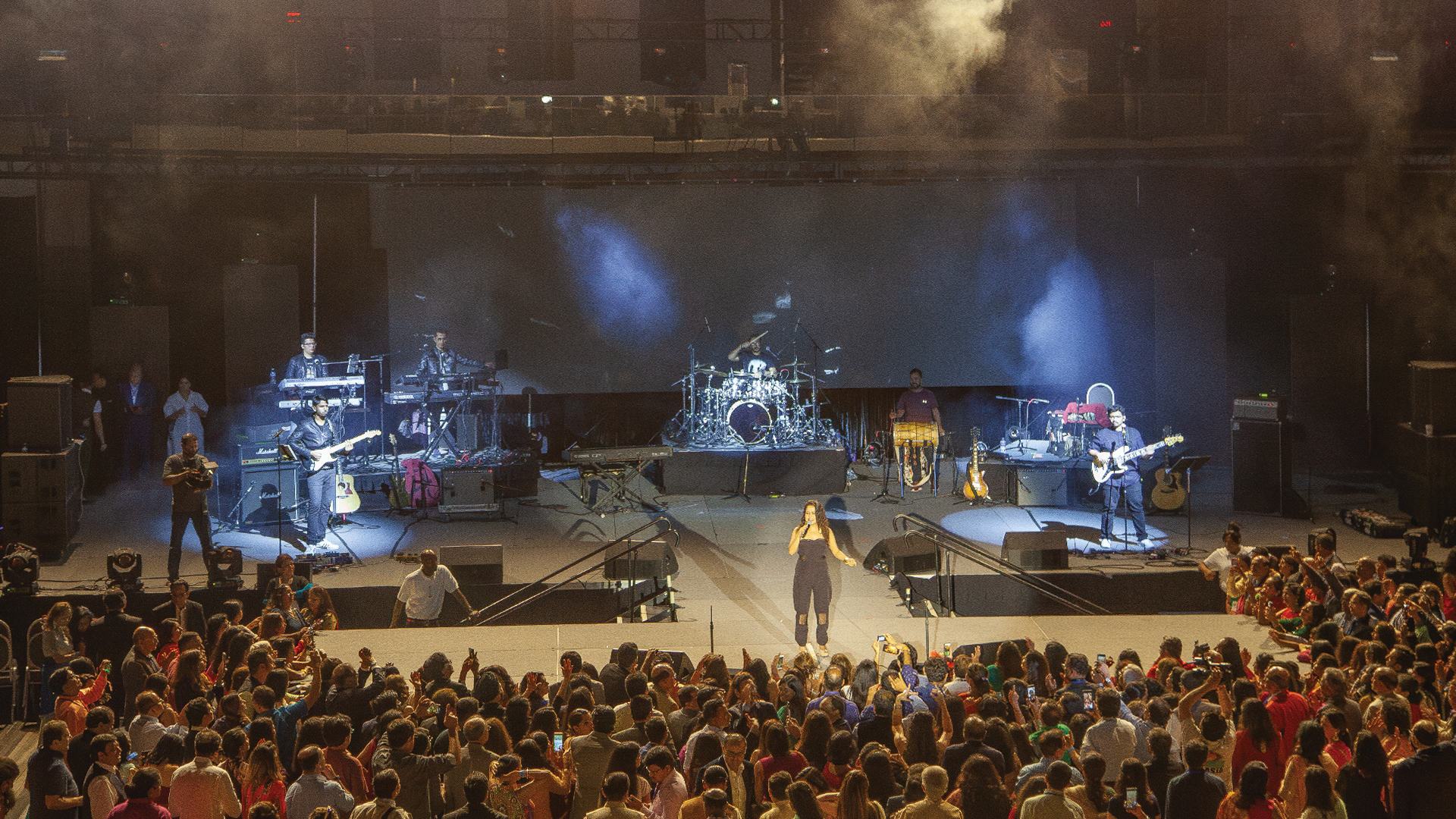
The call comes from the production manager at 9 PM the night before the show: the rehearsal window has been compressed from six hours to two. The venue had an overrun. The client added a site visit. The union call ended early. The reasons vary but the result is identical: the production team now must achieve in two hours what was designed for six — and the show will happen tomorrow regardless. Compressed rehearsal is one of the defining operational challenges of live event production, and how a team responds to it reveals everything about their preparation, communication, and technical discipline.
Pre-Production Is the Real Rehearsal
The foundational insight about compressed rehearsal is that the solution exists almost entirely in the work done before anyone arrives at the venue. Pre-production depth — the completeness of the show file, the specificity of the patch documentation, the readiness of the content library, the clarity of the cue list — determines how much of what would have been accomplished in a long rehearsal can instead be accomplished before call time. Productions that enter the venue with half-programmed console shows and undefined content routing will be demolished by a two-hour rehearsal window. Productions that arrive with complete, tested show files can use compressed rehearsal for verification and refinement.
This is the practical argument for pre-visualization tools: Capture Visualizer, ESP Vision, and grandMA3’s integrated Visualizer allow lighting programmers to build and test complete show files in virtual environments before load-in. A show file built in a pre-viz studio over three days can be loaded into the console on site and verified in a fraction of the time it would take to build from scratch on the venue floor.
Triage: What Gets Cut, What Gets Protected
When rehearsal time shrinks, the first decision is triage: which elements of the show must be rehearsed and which can be sacrificed or simplified. This is a difficult conversation that requires both technical judgment and political skill, because the elements that are technically easy to skip (lighting looks, background content) may be the elements the client cares about most.
A useful framework: categorize every rehearsed element as safety-critical (must happen: performer safety, audio system check, communications), show-critical (without this the show doesn’t work: main presentation flow, key video elements, speaker mic checks), or experience-enhancing (makes the show better but not functional: ambient lighting looks, entry music, room transitions). In a compressed window, triage ruthlessly to protect safety-critical and show-critical elements and openly acknowledge what experience-enhancing elements are being de-prioritized
Parallelizing Rehearsal Activities
Standard rehearsal runs activities sequentially because sequential flow mirrors the show’s running order and allows all departments to observe and respond to each element. Compressed rehearsal demands parallel operation: different departments working simultaneously on different elements of the show rather than waiting for the previous department to finish.
This requires clear coordination from the technical director — a master of the parallel workflow who keeps track of what each department is doing and prevents conflicts (audio cannot conduct a full playback check while lighting is doing a full blackout focus). Radios and party-line intercom become essential coordination infrastructure. Good TDs in compressed rehearsal situations run a continuous status broadcast over comms, keeping all department heads informed of what’s happening in adjacent workflows and preventing the confusion of departments stepping on each other’s tests.
Content and Show File Preparation
Compressed rehearsal magnifies the cost of any show file imperfection. A console with ambiguous cue names, unfinished palettes, or unfiled content requires operator cognitive overhead during rehearsal — overhead that consumes time the production doesn’t have. The discipline of clean console housekeeping — clear cue names, organized groups, complete palette libraries, logical layout — is not aesthetic preference in a compressed rehearsal; it is operational necessity.
For video systems, content organization in the media server is equally critical. Resolume Avenue and Disguise systems allow content to be organized into named layers and compositions with descriptive labels. Arriving at a compressed rehearsal with video content organized as “clip1, clip2, clip3” rather than “Opening_Logo_V2_Final, Presentation_BG_Blue, Closing_Reel” creates avoidable confusion during a high-pressure technical walk-through.
Communication With the Client
Compressed rehearsal requires honest, proactive communication with the client about what will and won’t be possible. Clients who believe a two-hour rehearsal will deliver the same result as a six-hour rehearsal will be disappointed — and surprised disappointment during a show is far more damaging to the client relationship than proactive disappointment in advance. The technical director or production manager should clearly articulate: “Given our revised window, here is what we will rehearse and here is what we are proceeding with confidence based on pre-production, but have not physically walked through in this venue.
This transparency also creates an expectation buffer for the show itself. If the client knows that one lighting sequence was not rehearsed and it looks slightly different from what was discussed, the earlier conversation provides context. If that same issue occurs without prior communication, it becomes a production failure. The same outcome, with radically different client impact, based purely on communication.
Post-Show Documentation When Rehearsal Was Compressed
Every show that ran with compressed rehearsal should generate a lessons-learned document focused on one question: what pre-production could have been done differently that would have reduced the impact of the compressed window? These documents feed directly into standard operating procedure refinements that build organizational resilience over time. The teams that handle compressed rehearsal most gracefully are the ones who have survived it before and extracted lessons from every previous experience.
