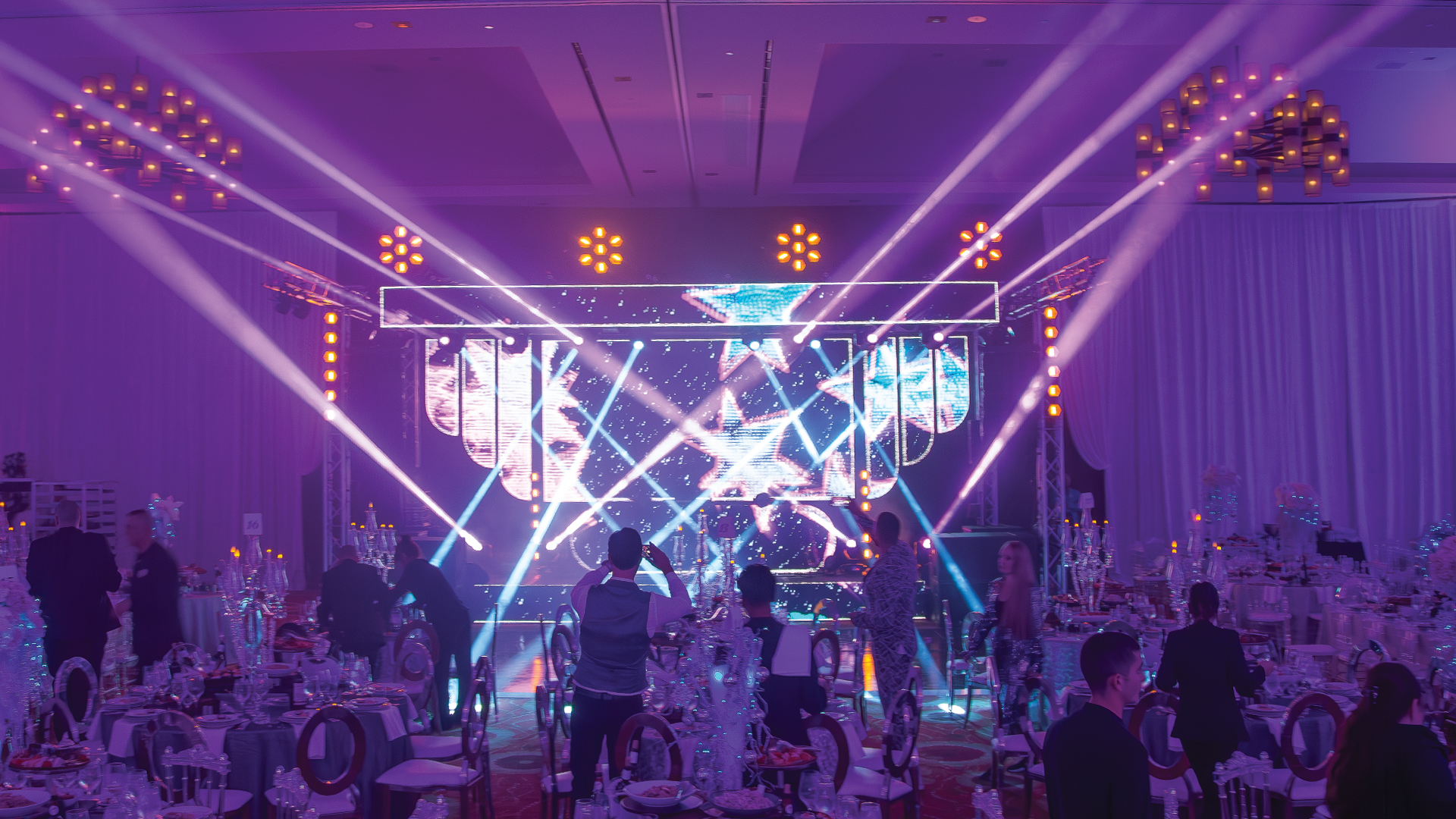
The moment changed everything: a lighting designer standing in a 16th-century cathedral, needing to illuminate the altar for a wedding reception, with the nearest power outlet thirty meters away across a stone floor that couldn’t be cabled without destroying the aesthetic. Traditional solutions meant generator trucks, cable ramps, or accepting compromised designs. Battery-powered fixtures offered an alternative that seemed almost too simple lights that could be placed anywhere, powered by integrated batteries, controlled wirelessly, producing output rivaling their cabled counterparts. What began as a solution for venue constraints has evolved into a fundamental shift in how production teams approach lighting deployment, with implications reaching far beyond cable-free convenience.
Technology Evolution: From Compromise to Capability
Early battery-powered lighting represented clear compromise. First-generation LED uplights from the mid-2000s offered limited output, short runtime, and poor color quality—acceptable for ambient decoration but unsuitable for serious production work. Lithium-ion battery technology improvements and LED efficiency gains transformed this equation. Contemporary fixtures from manufacturers like Astera, Chauvet Professional, and ADJ achieve output levels and color rendering that match or exceed wired alternatives, with runtimes extending beyond typical event durations at full brightness.
The Astera AX1 PixelTube exemplifies the current state of the art. Individual tubes provide full RGB color mixing with exceptional color accuracy, wireless DMX control via their AsteraBox system, and 20+ hour runtime at typical operating levels. The fixtures have appeared in major film productions, concert tours, and television broadcasts—applications where visual quality cannot be compromised. Similar capability exists in Chauvet Professional Well Fit, ETC ColorSource CYC battery variants, and numerous other products that have brought professional-grade wireless lighting to mainstream availability.
Historical Context: The Cable Problem
The event lighting industry built its infrastructure around cabled power distribution for generations. Theatrical conventions established in the late 1800s created expectations of fixed lighting positions connected by permanent wiring. Portable production adapted these conventions, developing standardized connectors, dimmer systems, and distribution equipment that assumed wired connection from source to fixture. Edison plugs, stage pin connectors, Socapex and Veam multicables—the entire vocabulary of lighting distribution assumes electrons flowing through copper from power source to luminaire.
This cabled paradigm created constraints that designers accepted as immutable. Fixtures could only be positioned where cables could reach. Load-in schedules included hours for running and organizing cable. Safety protocols addressed trip hazards that cables inevitably created. Rental costs included cable inventory that could rival fixture costs for complex layouts. When battery technology finally matured enough to challenge these assumptions, the industry initially approached wireless fixtures as specialty tools for exceptional circumstances rather than general-purpose alternatives. That perception has shifted dramatically as capability has improved.
Wireless Control: The Essential Complement
Battery-powered fixtures without wireless control offer limited advantage—eliminating power cables while retaining data cables defeats much of the deployment flexibility. Wireless DMX systems from LumenRadio, City Theatrical, and Wireless Solution provide reliable data transmission that enables truly cable-free operation. The LumenRadio CRMX protocol has become particularly prevalent, embedded directly in many battery fixtures rather than requiring external receivers. This integration simplifies deployment while ensuring compatibility across manufacturers who have licensed the technology.
Smartphone and tablet control applications provide additional flexibility for simpler installations. The Astera App enables direct Bluetooth connection to fixtures for quick color selection and intensity adjustment without any external hardware. Chauvet’s D-Fi USB system allows consoles without native wireless to control battery fixtures through simple USB adapters. These approaches suit corporate events, weddings, and installations where dedicated lighting operators may not be present—situations where battery fixtures often provide the most compelling advantages over traditional approaches.
Production Efficiency Gains
The labor savings from battery lighting extend beyond obvious cable elimination. A typical corporate dinner might require 30 uplights around a ballroom perimeter. With cabled fixtures, installation involves running cable from power distribution to each position, testing connections, securing cables against trip hazards, and eventually striking everything in reverse. With battery fixtures, technicians simply place units, confirm wireless connectivity, and move on. The installation time reduction of 60-80% for comparable positions translates directly into labor cost savings and faster load-in completion.
Venue relationships benefit from battery adoption. Historic venues, museums, and non-traditional spaces often restrict cable runs for aesthetic or safety reasons—floors that can’t be taped, walls that can’t be touched, fire codes that prohibit extension cords. Battery fixtures satisfy these restrictions without compromising lighting design. Production companies that maintain battery inventory can bid on events in venues their competitors cannot serve, creating competitive advantage from equipment selection. The premium pricing such venues command often exceeds the incremental cost of battery equipment rental.
Film and Television Applications
The film industry has embraced battery-powered lighting with particular enthusiasm. Astera Titan Tubes appear in major productions precisely because their cable-free nature allows placement within frame without visible infrastructure. A tube hidden inside a practical lamp, mounted behind a window frame, or positioned in any location where cable routing would be visible or impractical extends creative possibilities that wired fixtures cannot match. Cinematographers like Roger Deakins and Emmanuel Lubezki have incorporated battery fixtures into major productions, validating their color quality and reliability at the highest professional levels.
Television production benefits similarly. News crews deploying for remote broadcasts can establish professional lighting in minutes rather than hours. Interview setups in locations without accessible power—rooftops, remote locations, moving vehicles—become feasible with battery fixtures providing key and fill light. The Aputure MC, Litepanels Astra battery options, and similar compact fixtures have become standard in news and documentary kits where speed and flexibility determine success. The broadcast quality these fixtures achieve enables content that meets network standards from deployments that would have been impossible a decade ago.
Battery Management and Logistics
Operating battery-powered inventory requires logistics discipline that wired fixtures don’t demand. Every fixture must be charged before deployment—a simple requirement that becomes complex when managing hundreds of units across multiple concurrent events. Charging stations that can accommodate entire inventory sets simultaneously prevent bottlenecks between events. Astera charging cases and similar products from other manufacturers address this need, though warehouse electrical capacity must support the substantial power draw of charging dozens of fixtures simultaneously.
Runtime planning adds a variable that cabled fixtures eliminate. A six-hour event requires fixtures with sufficient battery capacity to operate throughout—with margin for extended programs, delayed starts, and the brightness levels that content actually demands. Conservative runtime estimates that assume higher-than-typical brightness levels prevent embarrassing failures when batteries deplete mid-event. Some productions deploy backup fixtures that can be swapped if primaries run low, trading equipment quantity for guaranteed runtime. Others schedule brief intervals where fixtures dim to extend capacity, timing these conservation periods when visual impact matters least.
Cost Considerations and ROI
Battery fixtures carry purchase prices significantly higher than wired equivalents—often 2-3x for comparable output specifications. This premium reflects battery technology, wireless electronics, and the engineering required to integrate all components into weather-resistant housings. For rental companies, amortizing this higher cost requires either premium rental rates or higher utilization rates that leverage deployment efficiency advantages. The calculation usually favors battery adoption when labor costs are factored alongside equipment costs—faster deployment means more events per crew day, offsetting equipment premiums.
Battery lifecycle affects long-term cost calculations. Lithium-ion batteries degrade over charge cycles, typically retaining 80% capacity after 300-500 cycles depending on chemistry and usage patterns. After this degradation, fixtures may need battery replacement—a service some manufacturers support and others don’t. Evaluating total cost of ownership rather than purchase price alone reveals the true economics of battery fixture investment. Products with user-replaceable batteries offer lower long-term costs than sealed units that require manufacturer service or replacement when batteries degrade.
Emerging Innovations
The trajectory of battery lighting technology suggests continued improvement. Solid-state battery development promises higher energy density—more runtime in smaller, lighter packages. Wireless power transmission technologies might eventually enable battery-free fixtures that receive power through electromagnetic fields, though practical implementations remain experimental. LED efficiency continues improving, meaning each battery watt-hour produces more light output—a trend that extends runtime without requiring larger batteries.
Intelligent power management in fixtures adapts output based on content and remaining battery capacity. A fixture that recognizes it’s displaying static color can reduce refresh rates and associated power consumption; one approaching battery depletion can automatically dim to extend operation through event conclusion. Astera’s CRMX implementation already includes battery status reporting to control systems, enabling operators to monitor remaining capacity across all fixtures from their console position. Future developments will likely expand such integration, creating battery management intelligence that operates transparently while preventing unexpected failures.
Integration with Production Ecosystems
Battery fixtures increasingly integrate with broader production technology ecosystems. Network control through sACN and Art-Net joins wireless DMX in providing connectivity options that suit different infrastructure preferences. Location tracking enables fixtures to report their positions to production management systems, helpful when fixtures move between events or get mixed between rental inventory pools. Some manufacturers embed RFID tags for asset tracking that monitors fixture location and utilization across rental operations.
The rise of battery-powered lighting represents more than equipment evolution—it reflects fundamental reconsideration of how production teams approach lighting deployment. The assumption that fixtures require cables created constraints designers accepted as fixed boundaries; battery technology reveals those constraints as artifacts of available technology rather than inherent requirements. Productions that embrace wireless lighting gain creative freedom, deployment efficiency, and venue access that traditional approaches cannot match. The cathedral wedding that seemed impossible now becomes routine—one example among countless scenarios where battery fixtures have transformed ‘we can’t do that’ into ‘easily done.’ The technology has matured from specialist solution to mainstream tool, and production teams that haven’t adapted risk competitive disadvantage as clients increasingly expect the flexibility that battery lighting provides.
