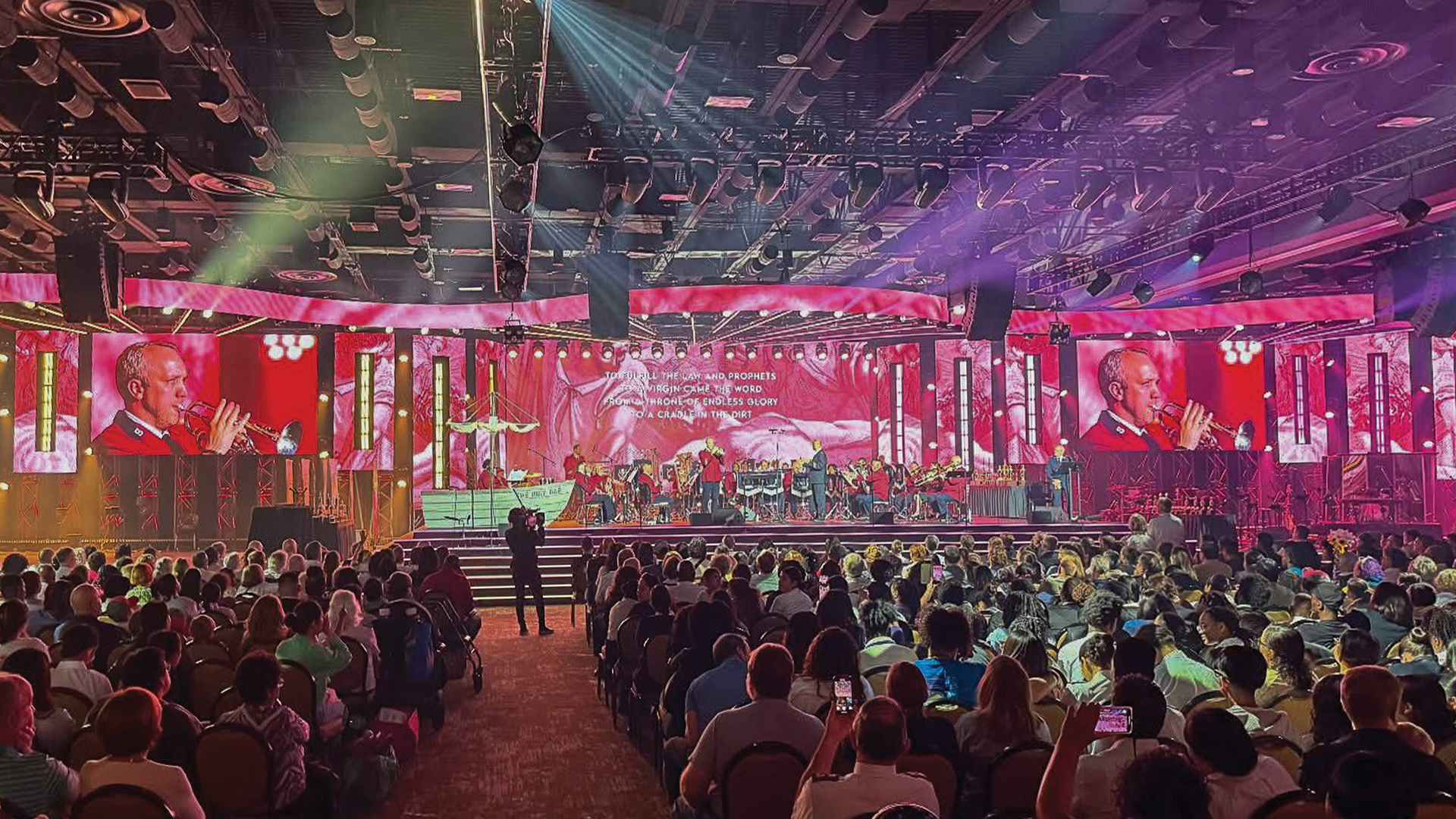
The moment a signal integrity issue surfaces mid-show — a rolling noise bar across an LED wall, a flickering IMAG screen, or an audio drop-out that punches through the PA — every technician in the room feels it in their chest. Long cable runs are one of the most underestimated battlegrounds in professional AV production, and the difference between a clean show and a disaster often lives inside the connectors, the cable spec sheet, and decisions made during the pre-production phase that most clients never see.
The Physics Behind Signal Degradation
Every cable run is a race against physics. Electrical signals attenuate — they lose amplitude over distance — and they pick up electromagnetic interference (EMI) from power lines, motors, dimmers, and wireless transmitters along the way. In analog audio, this manifests as hum, hiss, or high-frequency roll-off. In digital video, it appears as bit errors, sparkle artifacts, or outright signal loss. Understanding which signal type you’re running is the first discipline of cable management. A 75-ohm SDI cable rated for 300 meters will behave very differently under load than a generic coax pulled from a rental house bin.
The AV industry’s shift toward digital signal transport in the early 2000s — accelerated by the adoption of HD-SDI and later 3G-SDI — gave engineers more headroom on long runs, but also introduced new failure modes. An analog signal degrades gracefully; a digital signal either works or it doesn’t. This binary nature of digital signal transmission makes proper cable specification non-negotiable.
Choosing the Right Cable for the Job
Not all coax is created equal. For HD-SDI runs beyond 100 meters, Belden 1694A has been the industry gold standard for decades — its low-loss polyethylene dielectric and precision center conductor geometry hold 3G-SDI signals cleanly up to around 120 meters. Pushing past that threshold requires either a heavier cable like Belden 7731A or the introduction of active electronics. For audio, Mogami 2534 star-quad microphone cable remains the preferred choice among touring engineers for its exceptional common-mode rejection, which suppresses interference on long snake runs.
The rise of fiber optic transport has changed the calculus for truly long runs. Products like the Decimator MD-HX with SFP fiber modules, or dedicated fiber-to-SDI converters from manufacturers like Blackmagic Design and Neutrik opticalCon solutions, allow SD, HD, and 4K signals to travel thousands of meters without any signal degradation. A fiber run that costs more upfront eliminates the cascading problems that come from driving an SDI signal through 200 meters of copper and three untested connectors.
Active Distribution and Signal Amplification
When fiber isn’t an option and copper is the only path, active distribution amplifiers (DAs) become the engineer’s best friend. Units like the Kramer VM-2HDxl or Thor Broadcast H-SDI-DA-8 reclock and amplify the signal, effectively resetting the distance counter. Placing a DA at the halfway point of a long run — rather than at the source or destination — is a technique that experienced engineers call mid-span amplification, and it can double the effective reach of a cable run without compromising signal integrity.
In AoIP (Audio over IP) environments, the distance problem largely disappears. Protocols like Dante by Audinate, AES67, and RAVENNA transmit audio as data packets over standard gigabit ethernet infrastructure, capable of running thousands of meters across a venue’s existing network. Productions using Yamaha CL/QL series consoles, Shure Axient Digital wireless systems, or Allen & Heath dLive are already leveraging Dante’s zero-latency low-latency routing to eliminate analog snake runs entirely.
Connector Integrity: Where Most Failures Actually Live
Industry veterans will tell you bluntly: most long-run signal issues aren’t in the cable — they’re in the connector. A poorly terminated BNC connector introduces impedance mismatches that cause reflections at frequencies above 1 GHz, which is exactly the range where HD-SDI and 3G-SDI live. Properly crimped Canare BCP-B75 connectors on Belden 1694A remain the benchmark. On audio runs, Neutrik XX-series XLR connectors with proper strain relief and clean solder joints are non-negotiable for touring rigs that get coiled, deployed, and coiled again hundreds of times.
The discipline of cable testing before every deployment is what separates professional production companies from rental houses that wing it. Tools like the Fluke DSX2-8000 CableAnalyzer or the more AV-specific Phabrix Sx TAG give engineers objective bit error rate data and eye diagram analysis. Testing cables in the shop — not on the show floor with a client watching — is the professional standard.
Practical Routing Strategies for Complex Venues
Venue architecture often forces compromises. Running cable through conduit alongside dimmer rack power feeds is a guaranteed path to noise pickup unless you’re using balanced audio lines and shielded data cable. The standard rule is to cross power runs at 90 degrees and never run signal cable parallel to power for more than a few feet. In ballrooms and convention centers where cable runs follow the ceiling grid, cable trays that separate data, audio, and power are the professional approach.
For touring productions, multichannel snake systems from companies like Whirlwind and Ramtech allow dozens of audio channels to travel in a single ruggedized assembly, reducing setup time and failure points. The discipline of cable labeling — consistent, readable, durable labels at both ends — is unglamorous work that pays dividends at 2 AM during a troubleshooting call.
The Future: HDBaseT, SMPTE 2110, and IP Video
The broadcast world’s migration to SMPTE ST 2110 IP video transport is beginning to influence large-scale live event production. Systems built on Arista Networks switches and Nevion VideoIPath signal management can route 4K video signals across a venue’s IP backbone, making traditional point-to-point cable runs obsolete. HDBaseT technology, meanwhile, delivers 4K/60fps video, audio, ethernet, control, and power over a single Cat6 cable up to 100 meters — a revelation for corporate AV installs where cable management complexity is a major cost driver.
Managing long cable runs without signal loss is ultimately a discipline of preparation, specification, and testing. The show doesn’t care about your budget constraints or your timeline — it runs on physics. Invest in the right cable, terminate it properly, test it thoroughly, and build in signal redundancy wherever the production can’t afford a single point of failure. That’s the difference between an engineering team that gets called back and one that gets blamed.
