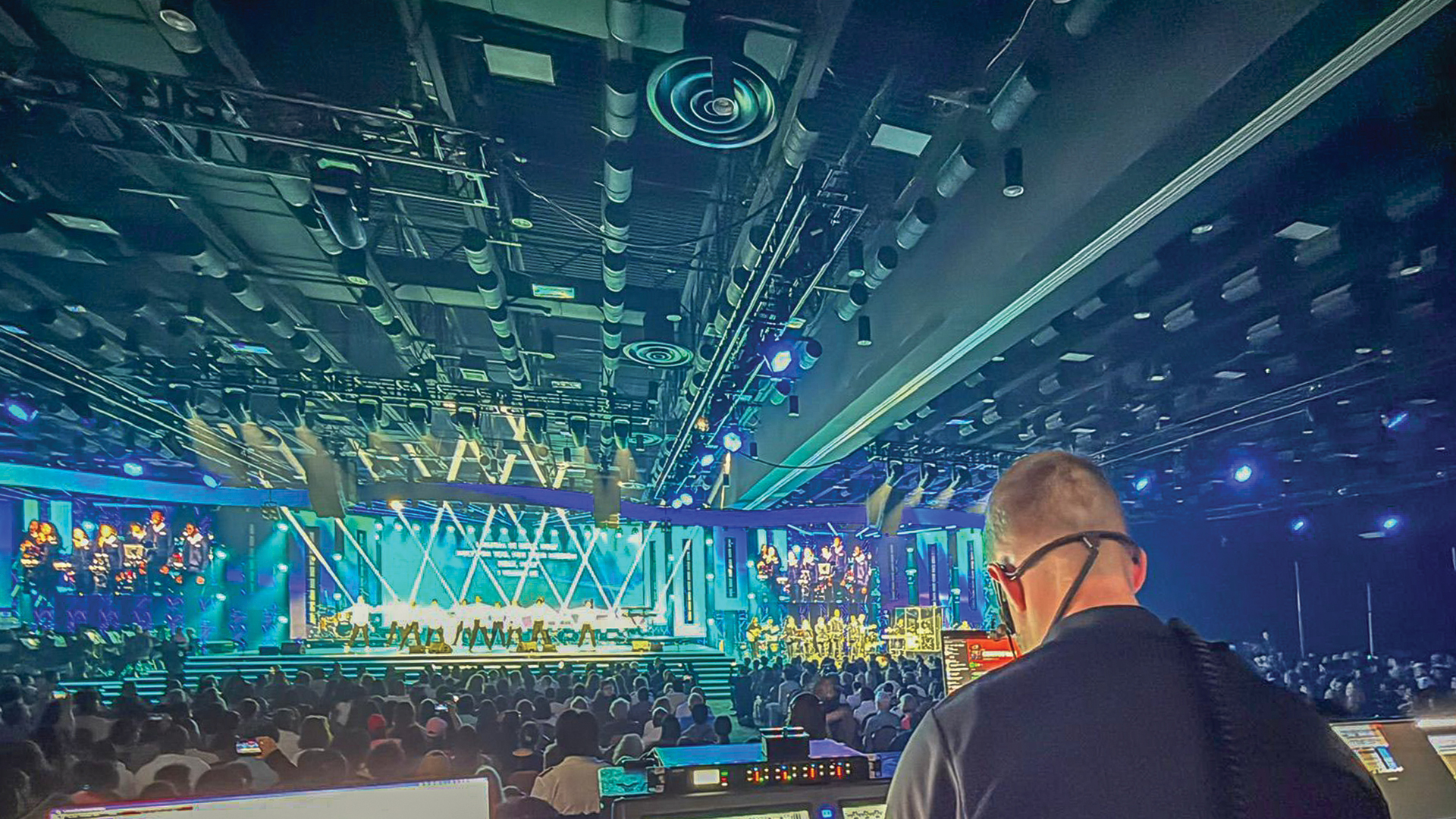
Shooting at high frame rates is one of the most technically exacting disciplines in production lighting, and it exposes every compromise in your rig with ruthless clarity. At 120fps, 240fps, or the extreme rates that cameras like the Phantom Flex4K or Sony a7S III are capable of in their slowest modes, the relationship between your light source and the camera’s sensor becomes a physics problem that standard event lighting knowledge simply doesn’t prepare you for. Build the wrong rig and you’ll be handing the editor a pile of flickering, banded footage that no amount of post-production can rescue.
The Flicker Problem: Why Your Standard Rig Won’t Work
Every AC-powered light source in the world pulses at the frequency of the electrical grid — 50Hz in Europe and much of Asia, 60Hz in North America. At standard frame rates (24, 25, 30fps), this pulsing is invisible because the camera samples the light in a ratio that evenly captures full cycles of the electrical waveform. Shoot at 120fps on a 60Hz grid, however, and you’re capturing the light during different phases of its cycle on different frames — resulting in the flicker banding that ruins high-speed footage.
The solution has two branches: choose light sources that don’t flicker, or control your shutter in exact multiples of the grid frequency. The flicker-free threshold for LED fixtures is tied to their PWM (Pulse Width Modulation) frequency — the rate at which they switch the LED array on and off to control brightness. Fixtures operating at PWM frequencies above 25,000Hz — like the Aputure Infinibar series or the Astera Titan Tube — are effectively flicker-free at any frame rate. Lower-quality LED fixtures with PWM frequencies of 1,000-3,000Hz will flicker visibly at high speed.
Fixture Selection for High-Speed Work
The gold standard for high-speed lighting has historically been HMI fixtures with electronic ballasts — units like the ARRI M40 or Joker Bug 800 running at 1,000Hz operate clean at any frame rate below 500fps. The continuous-spectrum output of HMI also renders skin tones with a fidelity that LED panels have only recently begun to approach. For productions demanding the absolute highest quality high-speed footage — car commercials, sports campaigns, music videos — HMI remains the first choice of rental houses like Keslow Camera and AbelCine.
Modern LED panels designed specifically for high-speed work — the Litepanels Gemini 2×1, the Quasar Science Rainbow 2, the Creamsource Vortex8 — operate at high PWM frequencies and offer CRI ratings above 95, making them viable for even critical color-matching applications. The Brompton Technology Tessera processing ecosystem, widely used in LED wall production, also includes high-speed mode options that synchronize panel refresh rates to camera frame rates, allowing LED walls to appear in the background of high-speed shots without banding.
Shutter Angle and Frame Rate Mathematics
When you cannot control the light source — shooting a live event or a venue with permanent installed lighting — the only path to flicker-free high-speed footage is shutter synchronization. The mathematical relationship is straightforward: for a 60Hz grid, your shutter speed must be an exact multiple of 1/60 second. At 120fps with a 1/120 shutter, you’re capturing exactly half a cycle of the 60Hz waveform every frame — and if the light pulses twice per cycle, you’ll see banding. The correct approach is a shutter angle that gives you a 1/60 second exposure: at 120fps, that means a 180° shutter angle multiplied by 2 — a 360° shutter — effectively exposing for the full frame period.
This is the territory where a deep conversation with the director of photography and the gaffer before load-in is essential. Productions that have learned this lesson the hard way — arriving on a stage lit with architectural LEDs of unknown PWM frequency and attempting to shoot high-speed content — have produced footage that looked professional right up until the playback.
Intensity Levels: The High-Speed Light Hunger
High-speed cameras at elevated frame rates have a dramatically reduced exposure window per frame. A camera shooting 240fps exposes each frame for 1/240 of a second — one-tenth the exposure of a 24fps camera at the same shutter angle. This means you need roughly ten times the light output to maintain equivalent exposure, which has enormous implications for your fixture selection, your generator load, and your heat management on set.
Productions shooting in studios typically address this with large HMI arrays through chimera softboxes or bounce frames of 12×12 unbleached muslin. On location, the LED wall itself can serve as a high-output, controllable backlight — a technique pioneered by productions like those at Industrial Light & Magic’s Stagecraft virtual production stage. The ARRI SkyPanel S360-C remains the benchmark for high-output, high-speed-safe soft LED lighting in critical production environments.
On-Set Verification Tools
Never trust your eye for flicker analysis — use hardware verification tools. The Sekonic C-800 spectrometer measures light output frequency directly. The Arri WCU-4 remote unit paired with camera diagnostics can show histogram flicker analysis in real time. Many productions also shoot a brief flicker test roll at the beginning of each setup — a gray card under the rig at the target frame rate — and review it on a calibrated monitor before the talent arrives on set. This discipline, borrowed from commercial production, catches problems before they become expensive.
Building a lighting rig for high-speed capture is an exercise in specification discipline. Know your fixture’s PWM frequency. Know your grid frequency. Do the shutter angle mathematics in advance. And above all, test before you shoot. The camera’s unforgiving frame rate will reveal every compromise you made during setup — and in high-speed production, there are no cheap fixes in post.
