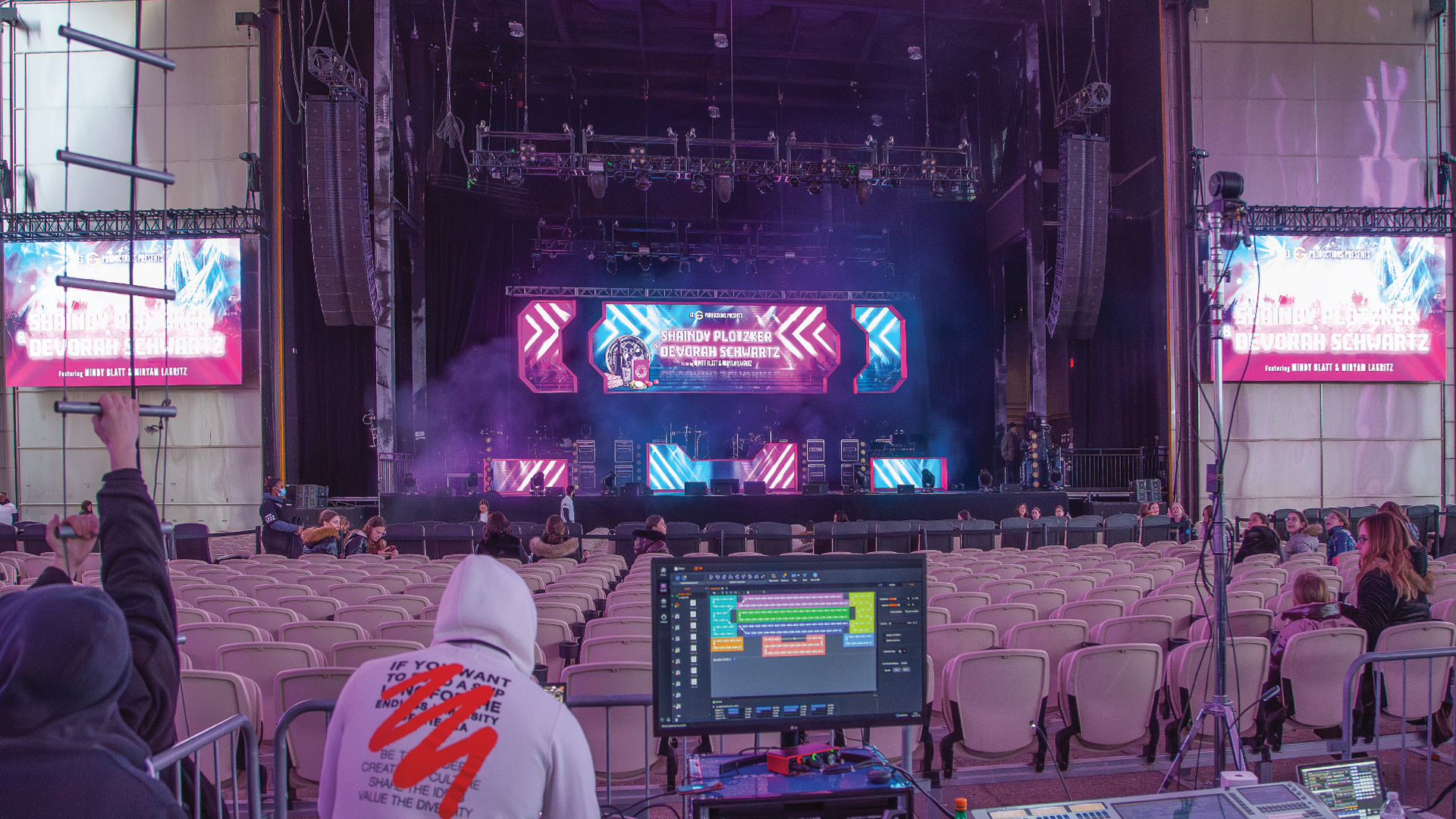
The cue stack was perfect—three hundred and forty-seven lighting cues programmed with surgical precision on the grandMA3 full-size console. The lighting designer had spent two weeks in pre-production and three days of tech rehearsal refining every transition. Then the dress rehearsal began, and approximately one-third of the moving light fixtures decided they had different artistic opinions about where they should point and what color they should be.
The Digital Dialogue Between Console and Fixture
Modern intelligent lighting operates through continuous conversation. The DMX512 protocol established in 1986 by USITT enabled this communication, allowing consoles to transmit up to 512 channels of control data per universe at forty-four times per second. A single Robe MegaPointe fixture might consume forty channels: pan, tilt, color mixing, gobos, zoom, focus, iris, prism, and more. Control a hundred fixtures and you’re managing thousands of data channels simultaneously.
When this conversation breaks down, the results vary from subtle to catastrophic. A dropped packet might cause a fixture to miss a color change. A cable fault could make a row of lights freeze mid-movement. A firmware incompatibility between console and fixture might produce behaviors that exist nowhere in the programming.
The Phantom Cue Phenomenon
That dress rehearsal disaster stemmed from what the crew eventually called “phantom cues”—commands the fixtures received that no one had programmed. The network infrastructure feeding Art-Net data to the lighting rig included a switch that had developed a fault, occasionally echoing data packets. Fixtures received duplicate commands with slight timing variations, interpreting the collisions as new instructions.
The lighting programmer spent the entire intermission replacing the suspect network switch and repatching through backup infrastructure. The second act proceeded normally—but the audience had witnessed twenty minutes of lighting chaos during act one, and no amount of technical explanation would undo that impression.
Fixture Personality Conflicts
Every automated fixture from every manufacturer interprets DMX commands slightly differently. The personality file or fixture profile in the console maps abstract control values to specific fixture behaviors, but these profiles don’t always match reality. A fixture updated with new firmware might respond differently to the same DMX values. A manufacturer’s software department might define color mixing algorithms that don’t align with the console programmer’s expectations.
The Claypaky Sharpy Plus and Martin MAC Viper represent different manufacturers’ approaches to similar functionality. A designer who programs beautiful looks on one fixture type might discover those looks translate poorly to the other, even with theoretically equivalent specifications. The lighting director learns which fixtures play well together and which combinations produce unexpected interactions.
The RDM Revolution
Remote Device Management (RDM) protocol added bidirectional communication to the previously one-way DMX world. Fixtures can now report their status, confirm their addresses, and alert operators to problems. A lamp failure triggers an immediate notification. A temperature warning indicates a fixture approaching thermal shutdown.
This capability has transformed troubleshooting. The production electrician can query fixtures remotely rather than climbing truss to inspect each unit. The MA Lighting Network Manager displays fixture health across entire rigs, flagging anomalies before they affect performance. But RDM adds another layer of network complexity—another potential point of failure in an already intricate system.
Power Quality and Fixture Behavior
Lighting fixtures are sensitive to power quality in ways that aren’t immediately obvious. Voltage sags can cause fixtures to reset unexpectedly. Electrical noise from dimmer racks or motor controllers can corrupt DMX signals running through nearby cables. A ground loop between console and fixture rack might introduce interference that manifests as erratic behavior.
Professional lighting departments invest in power conditioning and proper grounding. The Motion Labs distro feeding a touring lighting rig includes filtering that protects against voltage anomalies. DMX cables route separately from power cables to minimize electromagnetic interference. These precautions seem excessive until the day a ground fault causes a lighting console to output random data across all universes.
The Timing Trap
Lighting cues that work perfectly in isolation can fail when executed in rapid sequence. A fixture commanded to change color while still moving from a previous position might prioritize one parameter over another based on internal processing limitations. The fade time programmed in the console might not match the fixture’s mechanical capabilities—you can program a two-second move, but the fixture might require three seconds to physically achieve it.
Experienced lighting programmers develop intuition for fixture timing. They know that gobos rotate at specific speeds regardless of programmed timing. They understand that color flags take time to physically move into the beam path. They build cue sequences that respect these mechanical realities rather than fighting them.
Building Reliable Lighting Systems
Reliability in intelligent lighting comes from multiple redundancies working together. Network switches with failover capabilities prevent single-point failures. Backup consoles tracking the primary ensure continuity if the main desk fails. DMX merge devices allow alternative control paths. The infrastructure cost rivals the fixture investment, but the alternative—unreliable performance—costs more.
The fixtures will eventually ignore their cues again—no system is immune to failure. The professional lighting designer’s job is ensuring that when they do, the backup systems engage so seamlessly that neither the audience nor the artist notices. That’s the difference between a crisis and an anecdote: not whether problems occur, but whether anyone else knows they did.
Keywords: cue stack, grandMA3, lighting designer, moving light fixtures, intelligent lighting, DMX512 protocol, Robe MegaPointe, firmware incompatibility, network infrastructure, Art-Net data, lighting programmer, automated fixture, personality file, Claypaky Sharpy Plus, Martin MAC Viper, lighting director, RDM, lamp failure, temperature warning, production electrician, MA Lighting Network Manager, electrical noise, ground loop, lighting departments, Motion Labs distro, lighting console, fade time, fixture’s mechanical capabilities, lighting programmers, gobos rotate, DMX merge devices
