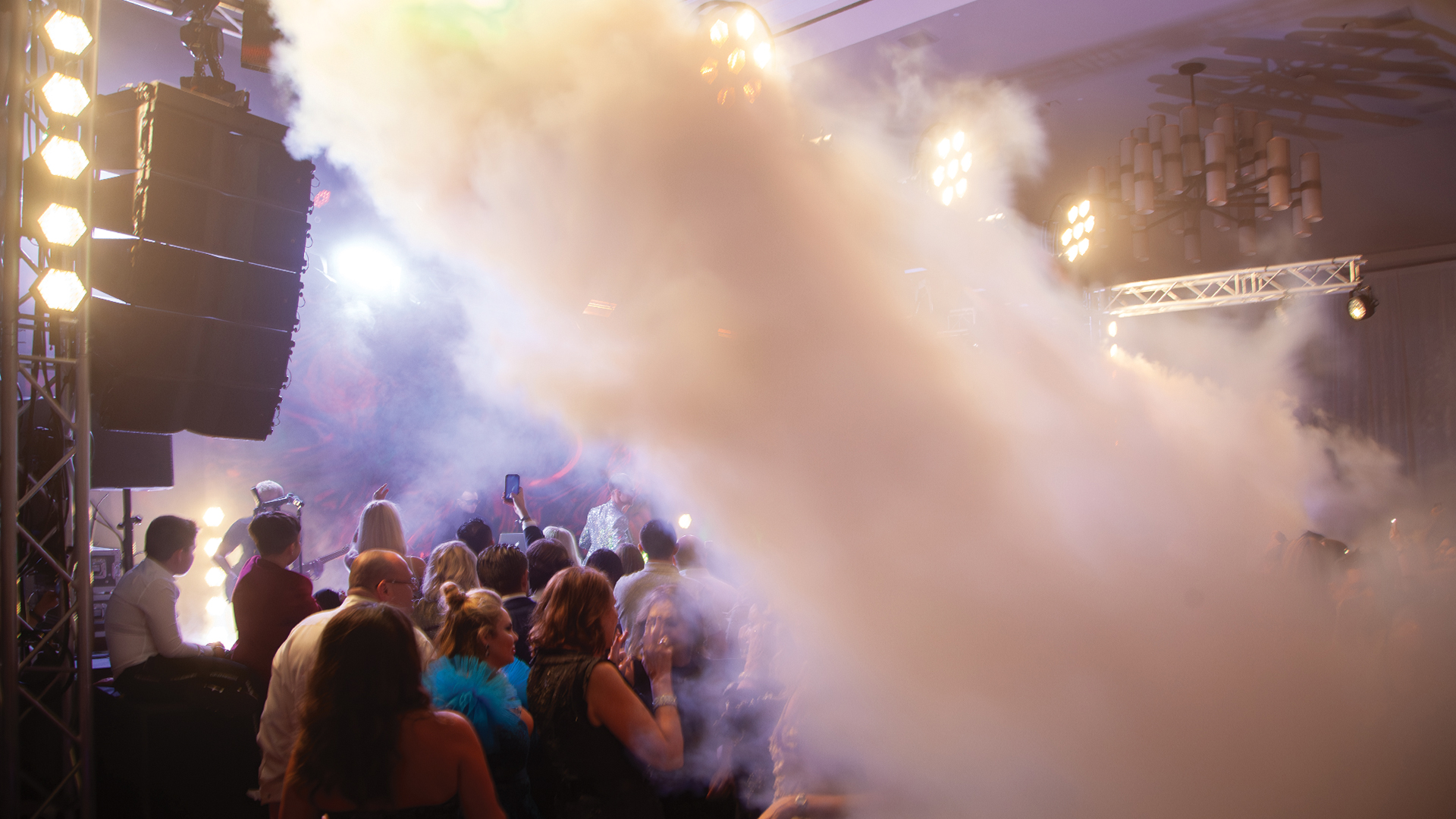
Tales From the Atmospheric Effects Department
The Unpredictable Art of Atmosphere
MDG makes some of the finest atmospheric effects equipment in the world. Their theONE generator produces particles so fine they’re virtually invisible until lighting strikes them, creating ethereal beams that have defined concert lighting for decades. Ultratec and Look Solutions have similarly revolutionized how we create atmosphere on stage. Yet despite decades of engineering refinement, fog machines remain among the most unpredictable elements in any production package.
The history of theatrical fog dates back to the Victorian era, when stagehands burned various substances to create mysterious effects. Dry ice became the gold standard for decades, creating that iconic low-lying fog that creeps across stages and into audience consciousness. When glycol-based fog fluids emerged in the 1970s, they promised controllability. The fog machines had other ideas.
When MDG Machines Developed Artistic Vision
During a 2017 arena tour, an MDG ATMe hazer began producing output that varied with the music. Not in response to DMX commands or artnet signals, mind you, but seemingly of its own accord. The lighting designer initially assumed a programming error in the grandMA3 console, but the trigger list showed nothing unusual. The machine was improvising.
MDG fluid chemistry is remarkably consistent, the company’s quality control is legendary in the industry. Yet this particular unit had apparently learned the setlist. During ballads, it produced gentle wisps. During climactic moments, it billowed dramatically. The production manager considered replacing it, then reconsidered. The audience was captivated.
This phenomenon isn’t entirely without explanation. Temperature variations in the heat exchanger, fluctuations in fluid viscosity, and changes in air pressure within venues all affect output. But explaining causation doesn’t diminish the uncanny sense that certain fog machines seem to understand show flow.
The Crackers and Hazers of Legend
Ultratec Radiance hazers and Look Solutions Unique 2.1 units occupy peculiar positions in production folklore. These machines are trusted on the largest tours worldwide, their reliability measured in thousands of operating hours. Yet every experienced special effects technician has encountered units that simply refused to cooperate.
The phenomenon of “fog rebellion” manifests in various ways. Machines that work flawlessly in rehearsal suddenly produce nothing on opening night. Units that have been serviced and tested will output triple their normal volume during crucial moments. Cracked oil crackers from Le Maitre have been known to continue producing atmosphere long after receiving stop commands, creating visibility hazards that stop shows entirely.
Martin by Harman introduced their JEM series to address some of these reliability concerns, incorporating advanced heating elements and fluid delivery systems. The machines became more consistent, but somehow less characterful. Veterans of the industry sometimes speak wistfully of the unpredictable Rosco units of the 1990s.
Environmental Factors and Machine Psychology
Understanding why fog machines misbehave requires appreciating the delicate chemistry involved. Glycol and glycerin based fluids must be heated to precise temperatures to create optimal particle sizes. MDG Max 5000 units and Ultratec Eclipse systems incorporate sophisticated temperature monitoring, but ambient conditions affect performance dramatically.
Humidity is the silent enemy of consistent fog production. In dry desert venues like Las Vegas, fog dissipates almost instantly. In humid coastal locations, it hangs indefinitely. HVAC systems designed for audience comfort become adversaries, their air handlers disrupting carefully programmed atmospheric effects without warning.
The professional response involves environmental monitoring, real-time adjustment, and occasionally, accepting that the machine will do what it wants. Allen & Heath dLive and Yamaha Rivage consoles now include atmospheric effect automation, but operators still keep hands near manual overrides.
Historic Fog Failures and Triumphs
The 1985 Live Aid concert featured fog effects that went dramatically wrong on the London stage, creating visibility issues that forced camera operators to improvise. Decades later, festival producers still cite this incident when discussing atmospheric effects risk management. Dry ice may have been involved, though official accounts vary.
Conversely, the Cirque du Soleil production “O” at the Bellagio has used fog effects consistently since 1998, integrating them so seamlessly with water elements that audiences believe they’re seeing mystical mist rising naturally. The special effects department maintains machines with religious devotion, and the consistency is remarkable.
Broadway productions face unique fog challenges, with eight shows weekly requiring absolute consistency. The Hadestown production’s fog effects have achieved legendary status for their reliability, a testament to the lighting and effects team’s meticulous maintenance protocols.
Living With Atmospheric Uncertainty
Modern production management includes contingency planning for fog equipment failure. Backup hazers are standard on major tours. DMX splitters ensure signal redundancy. Look Solutions Viper NT units often travel in pairs precisely because of atmospheric unpredictability.
Yet despite all preparation, fog machines retain their essential wildness. They respond to forces beyond programming, from barometric pressure changes to the collective breath of thousands of audience members. Perhaps this is why atmospheric effects continue to feel magical. They resist complete control, reminding us that nature always has the final word.
The best effects operators learn to work with their machines rather than merely operating them. They develop intuition for how different fluids perform in different seasons, how altitude affects output, how the vibrations from bass frequencies can alter fluid delivery. In this partnership between human and machine, the fog becomes not just an effect but a collaboration.
Next time you see beams of light cutting through haze at a concert, remember that what you’re witnessing isn’t just technology. It’s an ongoing negotiation between human intention and machine interpretation, with the audience as beneficiary of whatever agreement the two parties reach.
