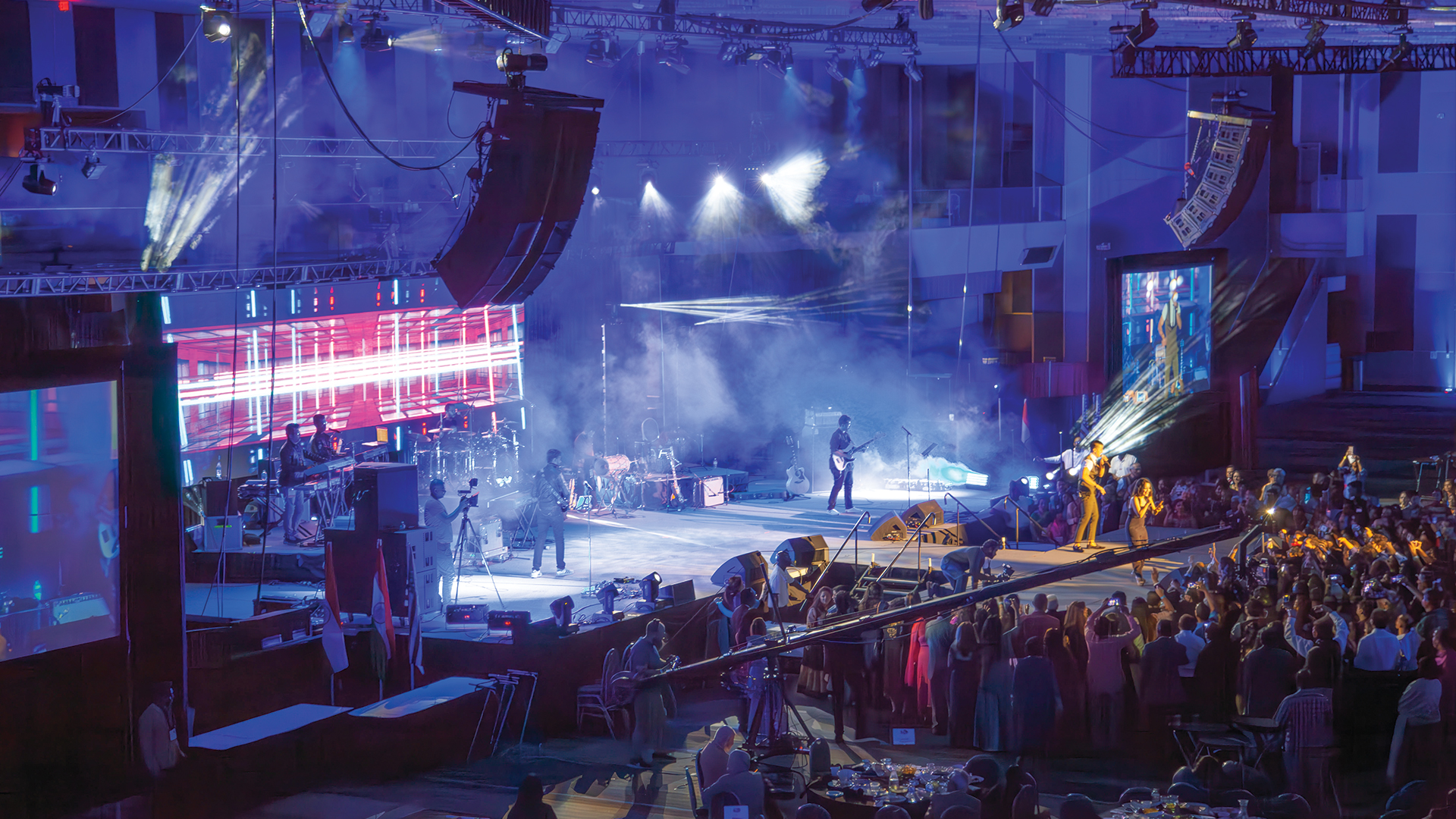
That unmistakable howl—starting as a subtle ring, building to a piercing scream that makes every audience member wince simultaneously—represents the moment when acoustic feedback transforms from theoretical concern to immediate emergency. Every audio engineer knows the sound intimately: the PA system has decided that whatever was happening onstage wasn’t interesting enough, and it’s going to provide its own contribution to the proceedings.
The Physics of Acoustic Revenge
Feedback occurs when sound from loudspeakers reaches a microphone and gets re-amplified in a self-reinforcing loop. The physics are elegantly brutal: at any frequency where the combined gain through the system exceeds 1, the signal grows exponentially until something limits it—usually the power supply, the speaker’s physical limits, or a very fast engineer hitting the mute button.
The d&b audiotechnik SL-Series and L-Acoustics K2 represent the current state of line array technology—systems capable of delivering pristine sound at tremendous volumes across vast distances. But all that precision becomes liability in feedback scenarios: the same detailed frequency response that makes them sound magnificent also means feedback can develop at frequencies humans find particularly irritating.
A Brief History of Amplified Sound
Feedback has plagued amplified sound since its earliest days. The Western Electric public address systems of the 1920s—used for everything from political rallies to sporting events—were notorious for unpredictable howling. Early engineers learned to position their horn speakers carefully and pray.
The Beatles’ 1965 Shea Stadium concert represented a watershed moment for live sound and feedback management. The PA system, which included 100-watt Vox amplifiers and Shea’s existing stadium speakers, couldn’t compete with 55,000 screaming fans. The band reportedly couldn’t hear themselves, let alone worry about feedback. That show’s audio failures helped drive the development of modern concert sound systems.
The Great Church Feedback Disaster
Among the most spectacular feedback incidents I’ve witnessed occurred at a cathedral wedding. The venue featured magnificent stone architecture with a reverberation time approaching four seconds—acoustics designed centuries ago for Gregorian chant, not amplified speech.
The client insisted on using wireless lavalier microphones—Sennheiser MKE 2 capsules on SK 6000 transmitters—for the officiant, despite our recommendations for alternative approaches. During the ceremony, everything functioned normally. Then the organ started playing.
Organs, particularly pipe organs in reverberant spaces, produce enormous energy at low frequencies that propagate throughout the structure. The lavalier microphone, mounted on the officiant’s vestments, was essentially contact-coupled to the stone altar—which was resonating sympathetically with the organ’s bass notes. The resulting feedback loop created a sustained howl at approximately 63 Hz that rattled the stained glass windows.
Modern Feedback Suppression Technology
Today’s audio systems incorporate sophisticated feedback suppression technology. Devices like the Shure DFR22 and dbx AFS2 use digital signal processing to detect feedback frequencies and apply automatic notch filtering. The Sabine FBX series pioneered this approach in the 1990s, revolutionizing installed sound applications.
Modern digital mixing consoles integrate feedback suppression directly. The Yamaha CL/QL series includes Dugan automixing with automatic gain sharing that reduces feedback potential in multi-microphone scenarios. Allen & Heath dLive offers DEEP processing modules specifically designed for feedback management.
The Waves SoundGrid platform provides real-time processing including the X-FDBK plugin, which can identify and suppress feedback frequencies with minimal impact on overall sound quality. These tools have made feedback emergencies less common—but when they occur, they’re often in situations specifically designed to defeat modern suppression systems.
Venue Acoustics and System Design
Preventing feedback begins with system design that accounts for venue acoustics. The relationship between microphone placement, speaker positioning, and room reflections determines how much gain is achievable before feedback develops. This ‘gain before feedback’ metric defines the practical limits of any sound reinforcement system.
Line array systems from manufacturers like JBL VTX, Meyer Sound LEO, and Martin Audio MLA offer directional control that can increase gain before feedback by steering sound away from stage microphones. The Meyer Sound Spacemap Go system takes this further, using spatial audio processing to create precise coverage patterns that minimize feedback potential.
In-ear monitoring systems like the Shure PSM 1000 and Sennheiser 2000 IEM eliminate stage wedge monitors entirely, removing a major feedback source. When performers hear themselves through sealed earpieces rather than loudspeakers, the acoustic feedback path between PA and stage microphones no longer exists.
The Human Element in Feedback Control
Technology alone cannot prevent all feedback incidents. Performers who cup their hands around microphones create instant feedback disasters by blocking the null zone designed into cardioid pickup patterns. Speakers who wander in front of main PA hangs discover that physics doesn’t care about their dramatic intentions.
Pre-event communication helps. Briefing performers about microphone handling technique—keeping hands on the shaft, maintaining consistent distance, avoiding PA coverage zones—prevents many incidents. Some production companies now include microphone handling demonstrations in standard pre-event protocols.
Sound check procedures matter enormously. The traditional approach—ringing out monitors by pushing gain until feedback develops, then notching the offending frequencies—builds a baseline of protection. Modern approaches using system measurement software like Smaart or SysTune can identify potential feedback frequencies before they become audible problems.
Emergency Response Protocols
When feedback occurs despite all precautions, response speed determines damage extent. Experienced A1 engineers develop reflexive responses—hands moving toward mute buttons before conscious processing identifies the problem. This trained reaction can limit feedback exposure to fractions of a second.
Console layout affects response time. Engineers configure their mixing surfaces with commonly-problematic channels in immediately accessible positions. VCA groups that gang all stage microphones allow single-motion emergency muting. Some engineers assign dedicated mute groups to physical buttons that can be activated without looking.
Post-incident analysis should identify root causes. Was the feedback caused by performer positioning, system configuration, or environmental change? A door opening might have created a new reflection path. A temperature shift might have altered room acoustics. Understanding why feedback developed prevents recurrence.
When Feedback Becomes Feature
Interestingly, controlled feedback has become an artistic tool in some contexts. Jimi Hendrix famously incorporated guitar amplifier feedback into performances. Contemporary noise artists deliberately induce feedback as compositional element. The E-bow creates sustained string vibration that produces controllable feedback effects.
Some sound designers have experimented with intentional feedback in theatrical contexts—using carefully managed PA feedback to create tension or underscore dramatic moments. This requires exceptional control, precise system tuning, and willingness to accept that things might go very wrong.
The PA systems that love feedback too much remind us that amplified sound exists in constant tension with physics. Every gain increase brings the system closer to self-oscillation. Every acoustic environment creates new feedback potential. The best audio engineers understand this relationship intimately, managing it through design, technology, and reflexive skill—because when feedback happens, everyone hears the consequences.
