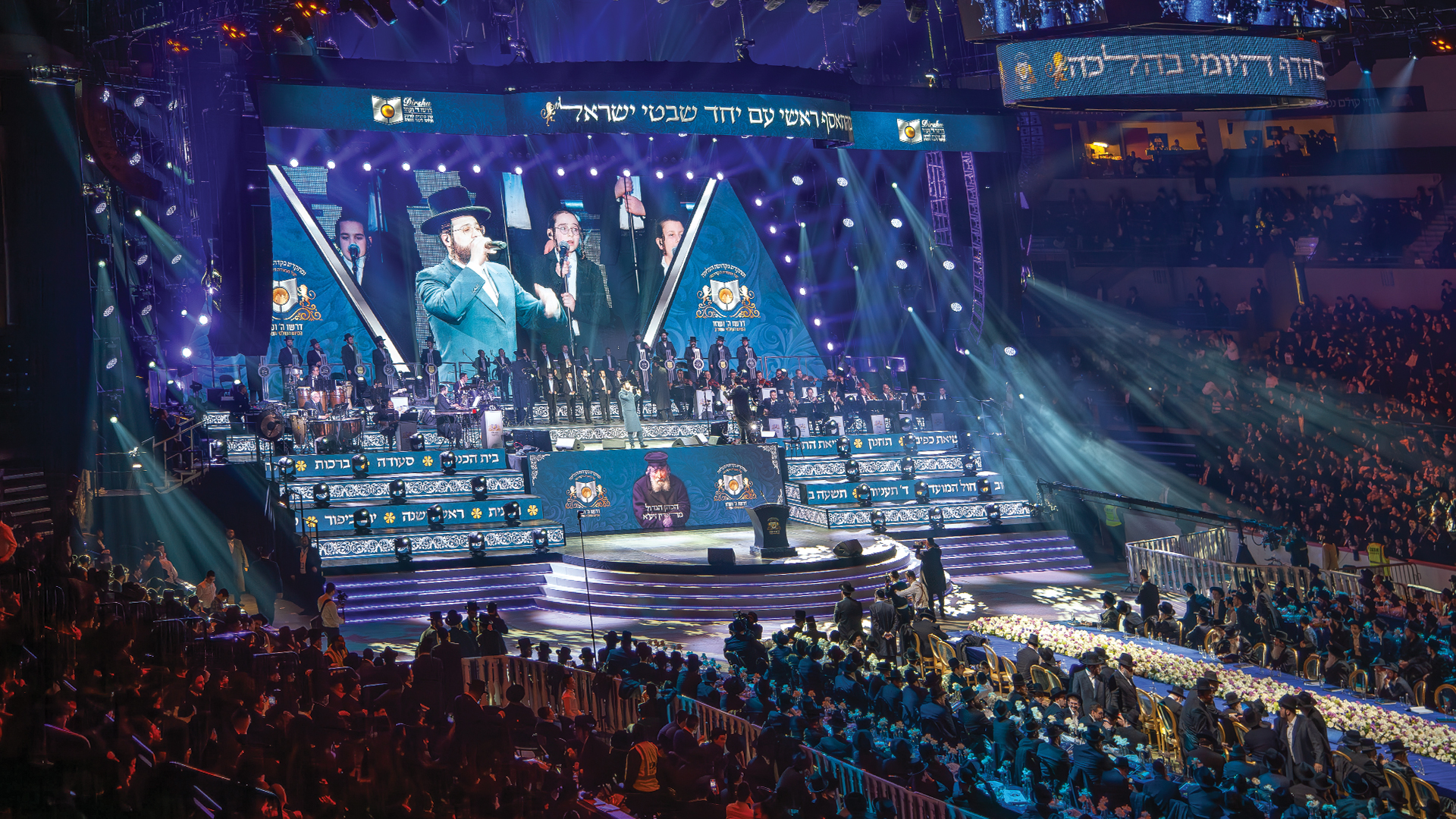
Walk the show floor at InfoComm or ISE and every LED manufacturer booth makes claims about HDR capability. The marketing materials blend together: stunning images of sunsets with impossible detail in both shadows and highlights, specifications boasting peak brightness figures that sound impressive, and demonstrations running content specifically crafted to showcase wide color gamuts. Yet when those same displays arrive on job sites for corporate events, the promised visual magic often fails to materialize. The disconnect between specification sheets and real-world performance stems from a fundamental misunderstanding of what High Dynamic Range actually means in the context of LED video walls.
Decoding the HDR Alphabet: HDR10, Dolby Vision, and HLG
The term HDR encompasses multiple competing standards, each with distinct technical approaches. HDR10, the most widely adopted format, uses static metadata embedded at the start of content to inform the display about peak brightness and color volume. This metadata remains constant throughout playback—a single set of instructions intended to guide tone mapping across the entire program. Dolby Vision advances this concept with dynamic metadata that can adjust frame by frame, allowing scene-specific optimization. A dark interior followed by a bright exterior receives tailored treatment rather than a one-size-fits-all approach.
Hybrid Log-Gamma (HLG), developed jointly by the BBC and NHK, takes a broadcast-centric approach. The format maintains backward compatibility with standard dynamic range displays while offering enhanced performance on HDR-capable screens. This makes HLG particularly relevant for live event applications where content might simultaneously feed LED walls, broadcast trucks, and legacy monitors. The signal remains interpretable across the entire chain without requiring separate SDR and HDR deliverables.
The Historical Arc: From CRT Limitations to Modern Capability
Understanding HDR requires acknowledging why Standard Dynamic Range (SDR) became standard in the first place. Cathode ray tube televisions in the mid-20th century could achieve peak brightness around 100 nits (candelas per square meter). The Rec. 709 color space and gamma curve established in 1990 reflected these physical constraints. Content mastered for broadcast television assumed viewers would watch on displays incapable of exceeding these limits. The entire production pipeline—cameras, monitors, color grading suites—calibrated around a shared understanding of what displays could actually reproduce.
LED technology shattered these constraints. Professional LED panels routinely achieve 1,000 to 5,000 nits peak brightness, with outdoor displays pushing beyond 10,000 nits to combat direct sunlight. Manufacturers like Leyard, Planar, and Daktronics developed panels capable of displaying brightness levels that would have seemed impossible during the CRT era. The hardware advanced faster than the content ecosystem—creating displays that could show HDR content before most content was actually produced in HDR.
Nits, Stops, and the Perception Gap
Peak brightness specifications tell only part of the story. A display advertising 3,000 nits peak brightness might achieve that figure only in a tiny highlight area while the full-screen white level sits closer to 800 nits. This distinction matters enormously for event production. A keynote presenter standing in front of an LED wall needs consistent brightness across the entire surface, not specular highlights that the display can hit momentarily. The ABL (Automatic Brightness Limiting) circuitry in most professional displays throttles output when large portions of the screen display bright content simultaneously, protecting components from thermal damage.
Dynamic range measures the ratio between the brightest and darkest reproducible values, typically expressed in stops (each stop represents a doubling of light). SDR content operates within roughly 6 stops of dynamic range. HDR content can encode 12 to 14 stops, approaching the range human vision can perceive in a single scene. The SMPTE ST 2084 PQ (Perceptual Quantizer) curve underlying HDR10 and Dolby Vision maps this extended range efficiently, allocating more code values to perceptually significant differences rather than mathematically linear increments.
Color Volume: Beyond the Color Triangle
HDR involves more than brightness—color gamut expansion plays an equally crucial role. The Rec. 2020 color space specified for HDR content encompasses roughly 75% of visible colors, compared to Rec. 709’s approximately 35%. This expansion enables LED walls to display saturated reds, greens, and blues that standard dynamic range simply cannot encode. The DCI-P3 color space, originating from digital cinema, sits between these extremes and represents a practical target for most professional displays.
Color volume combines gamut and luminance into a three-dimensional representation. A display might cover 95% of DCI-P3 at moderate brightness but only 70% at peak luminance. These variations matter for content creators—a sunset gradient mastered assuming full Rec. 2020 coverage will clip unpredictably on displays that can’t maintain saturation at high brightness levels. Brompton Technology‘s processing solutions address this through sophisticated color management that maps source content to each display’s actual capabilities rather than assuming ideal performance.
Processing Chain: Where HDR Breaks Down
The path from content creation to LED panel involves multiple processing stages, any of which can compromise HDR integrity. Media servers must decode HDR content and pass it to output hardware with metadata intact. Disguise servers support HDR workflows through their professional video outputs, but the receiving processor must correctly interpret the incoming signal. Novastar and Colorlight LED processors offer HDR modes, but configuration requires understanding whether the incoming signal uses PQ or HLG transfer functions.
Matrix switchers and signal distribution present additional challenges. Many event production workflows route video through Barco E2 or Analog Way Aquilon presentation switchers that must pass HDR metadata without alteration. Inserting an SDR source into an HDR pipeline—a common scenario when mixing pre-produced video with live camera feeds—requires real-time conversion that can introduce visible artifacts. The AJA FS-HDR provides hardware-based conversion between SDR and HDR formats, applying tone mapping that maintains visual consistency across mixed sources.
On-Site Calibration: Theory Meets Reality
Factory calibration provides a starting point, but venue conditions demand on-site adjustment. Ambient light levels in convention centers, theatrical spaces, and outdoor venues vary dramatically. An LED wall calibrated for a dark studio appears washed out under the fluorescent lights of an exhibition hall. Portrait Displays CalMAN software paired with a Klein K-10A or Photo Research SpectraScan spectroradiometer enables precise measurement and adjustment. The calibration process verifies that the display’s actual output matches the intended targets for white point, gamma curve, and color primaries.
Uniformity correction addresses another practical concern. LED panels exhibit variation in brightness and color between individual modules, especially after extended use or when mixing panels from different manufacturing batches. Brompton Tessera processing includes advanced uniformity correction that measures and compensates for these differences, but the correction works within limits. Severely mismatched panels visible in HDR content—particularly in gradients and solid colors—may require physical replacement rather than electronic correction.
Content Creation for LED HDR
Producing content specifically for HDR LED displays differs from mastering for home television viewing. The viewing distance and screen size typical of event production mean that fine detail visible on a reference monitor disappears when content plays on a wall viewed from 30 meters. Colorists working in DaVinci Resolve or Baselight need reference displays that approximate the final viewing environment. Grading on an EIZO ColorEdge HDR monitor calibrated for DCI-P3 provides a reasonable approximation, but nothing substitutes for viewing test content on the actual display in the actual venue.
Motion graphics artists face particular challenges. After Effects supports 32-bit float color depth essential for HDR work, but the default preview pipeline compresses to 8-bit for performance. Enabling HDR preview requires specific hardware and software configuration. Cinema 4D and Unreal Engine render HDR output natively, but artists must consciously design for extended luminance. An explosion effect that looks spectacular in SDR might clip harshly when rendered to HDR if the artist doesn’t adjust highlight levels appropriately.
Virtual Production and HDR Integration
The virtual production revolution has made HDR LED walls essential for camera-facing applications. Stages like NEP Sweetwater and Dimension Studios operate LED volumes that must output sufficient brightness to serve as practical lighting for talent while maintaining color accuracy for in-camera visual effects. The camera captures both the performer and the LED background simultaneously, demanding that the wall perform as both display and lighting instrument. HDR enables this dual role by providing the luminance headroom to illuminate scenes naturally.
Unreal Engine‘s nDisplay cluster rendering delivers HDR output to LED walls in real-time, but the display must handle this content correctly. Color management through OpenColorIO (OCIO) ensures consistency between what artists see in the editing environment and what appears on the LED volume. The ACES (Academy Color Encoding System) workflow provides a scene-referred foundation that preserves full dynamic range throughout post-production, outputting to display-referred HDR only at final delivery.
Practical Recommendations for Event Producers
Navigating HDR for live events requires pragmatic assessment of actual needs versus marketing appeal. For corporate presentations with primarily PowerPoint content and live camera feeds, full HDR workflows add complexity without proportional benefit. The content simply doesn’t contain the dynamic range information that HDR preserves. Reserve HDR infrastructure investment for productions featuring cinematic video content, high-end motion graphics, or virtual production applications where the enhanced capability delivers visible improvement.
When HDR does suit the production, ensure the entire signal chain supports the chosen format. Verify that media servers, switchers, processors, and LED panels all handle HDR metadata correctly. Test with actual content rather than relying solely on specifications. A display that handles HDR10 flawlessly might exhibit problems with Dolby Vision content if the processor lacks proper licensing. Build testing time into load-in schedules—HDR troubleshooting often involves firmware updates, configuration changes, and iterative adjustment that cannot be rushed without compromising the final result.
The future trajectory points toward ubiquitous HDR capability. As cameras, displays, and processing equipment converge on HDR standards, the distinction between SDR and HDR workflows will blur. Producers who develop expertise now position themselves for this transition. Understanding what HDR actually means—beyond the marketing terminology—enables informed decisions about when and how to deploy this capability effectively. The real meaning of HDR lies not in specification sheet numbers but in the visible difference it makes for audiences experiencing content on professional LED displays.
